
LifeStraw personal water filter
The original straw-like water filter that removes bacteria, parasites & microplastics
The Technology
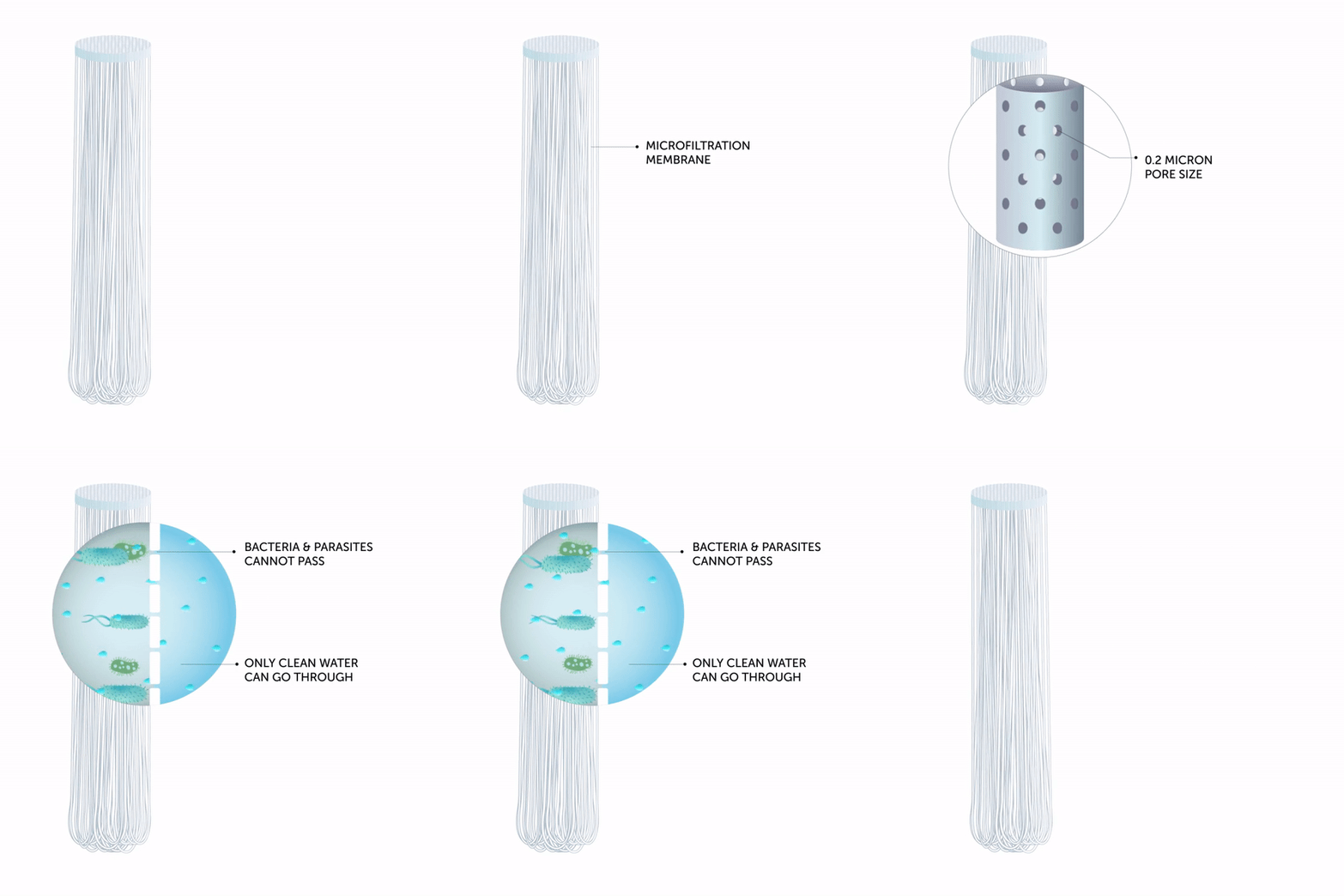
LifeStraw Membrane Microfilters
LifeStraw’s membrane microfilters are made of hollow fiber membrane technology – a similar technology used in kidney dialysis. These membranes are made of small straws that contain microscopic pores of 0.2 microns in diameter. Dirty water enters one side of the straws and clean water passes through the pores while bacteria, parasites, microplastics, dirt, silt, sand and cloudiness are blocked and unable to pass through because they are too large. The result is safe drinking water flows into a clean chamber for drinking while contaminants are blocked. LifeStraw’s membrane microfilters are capable of removing 99.999999% (log 8) of bacteria (including E. coli), 99.999% (log 5) of parasites (Giardia, Cryptosporidium, etc.), and 99.999% (log 5) of microplastics.
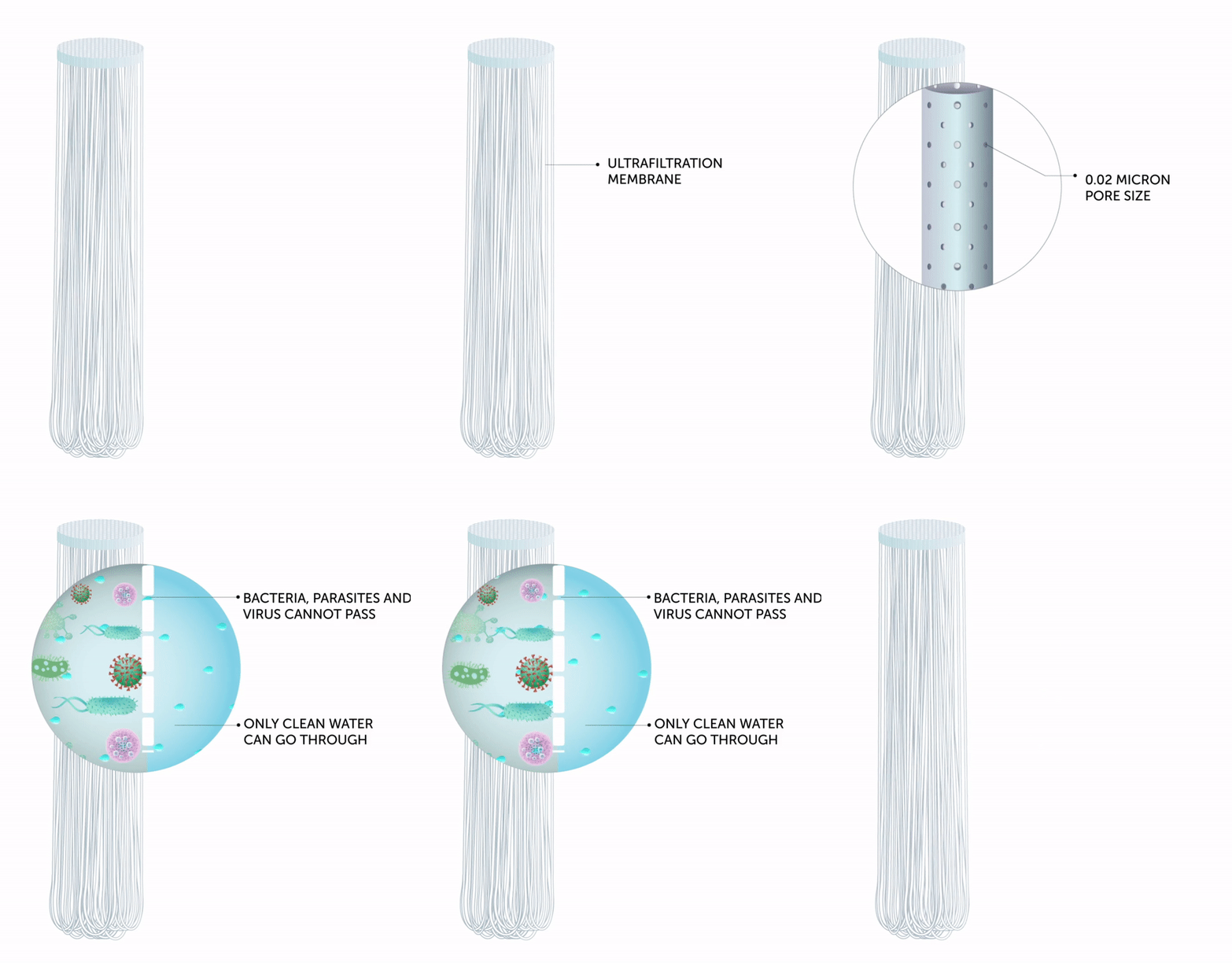
LifeStraw Membrane Ultrafilters / Purifiers
The difference between microfilters and ultrafilters is the pore size – LifeStraw’s microfilters have a pore size of 0.2 micron while the ultrafilters have a pore size 10 times smaller: 0.02 micron. Both technologies work via the same mechanism, but ultrafilters (because of their smaller pore size) also remove virus (in addition to bacteria, parasites, microplastics, silt, sand, and cloudiness). Because of their smaller pore size, ultrafilters also often have a slower flow rate or require more pressure than microfilters. LifeStraw’s membrane ultrafilters are capable of removing 99.999% (log 5) of viruses, 99.999999% (log 8) of bacteria (including E. coli), 99.999% (log 5) of parasites (Giardia, Cryptosporidium, etc.), and 99.999% (log 5) of microplastics.

Activated Carbon Filtration
LifeStraw Activated Carbon Filters improve water taste by removing chemicals such as chlorine and odors. The activated carbon has been treated with specific processes to open millions of tiny pores between carbon atoms. LifeStraw uses an advanced, special formulation that is made from fibers instead of traditional granulated carbon which improves longevity and performance. This process works via adsorption, when contaminants become blocked inside the pore structure of the carbon and bind to the surfaces of the fibers. Over time, once all surface areas are full, the carbon filter must be replaced. Please note the longevity recommendations for each product.
Key Product Documents
Download the PDF version of our product’s user manuals and lab results












Frequently Asked Questions
How do I know when it is time to replace my filters or when they have stopped working?
The LifeStraw Activated Carbon and Ion Exchange filter lasts approximately 40 gallons (150 liters). We estimate that it should be replaced every 2 months. This assumes that a household uses approximately 2.5 liters per day or refills the 7-cup filter housing approximately 5 times per day. If you are using the product less, you can adjust your estimate of length of time needed before you must replace the activated carbon and ion exchange filter. Another way to tell if the filter has reached its lifetime capacity is if you can detect that the taste of your water has returned to the original tap taste. This may be more apparent for some people than others. Heavy metals and chemicals rely on prolonged exposure to cause sickness so if your activated carbon and ion exchange filter has a short lapse in timespan, you should not be at immediate risk. The membrane microfilter lasts 264 gallons (1,000 liters). We estimate that it should be replaced once per year. This filter ends its lifetime when flow rate becomes drastically reduced or completely blocked out of the filter. It will never allow bacteria, parasites or microplastics to filter through it. This is critical as these contaminants can cause immediate sickness unlike most chemicals and heavy metals found in water.
What is the capacity of the filter? How long does it take to fill?
It takes approximately 5 to 6 minutes to filter each batch (filling the filter housing to the top). It takes about 3 fills to get to the bottom of the handle (which is the max fill line). The capacity is 7 cups (approximately 1.66 liters).
Does your filter measure total dissolved solids? How does it perform against them?
In general, concentration of heavy metals such as Lead, Mercury, Cadmium, Chromium, etc. in tap/ground water (excluding sewage, industrial waste water) is only in ppb level (part per billion) and is extremely low compared with concentration of normal minerals such as Potassium, Calcium, Magnesium, etc. in the same source of water which is in ppm level (part per million) Our activated carbon fiber and ion exchange filter is specifically designed to selectively remove heavy metals while keeps healthy minerals in the water through a complex process: physical adsorption resulting from Van der Waals forces and chemical adsorption where chemical bonds are formed to trap heavy metals in the porous and high surface area of the adsorbent material. In theory, this process can reduce TDS in the water but only in µg/L level which cannot be detected by a normal reading when taking into account the deviation of TDS in raw water (e.g city tap water), accuracy/repeatability of TDS meter & measuring operation.